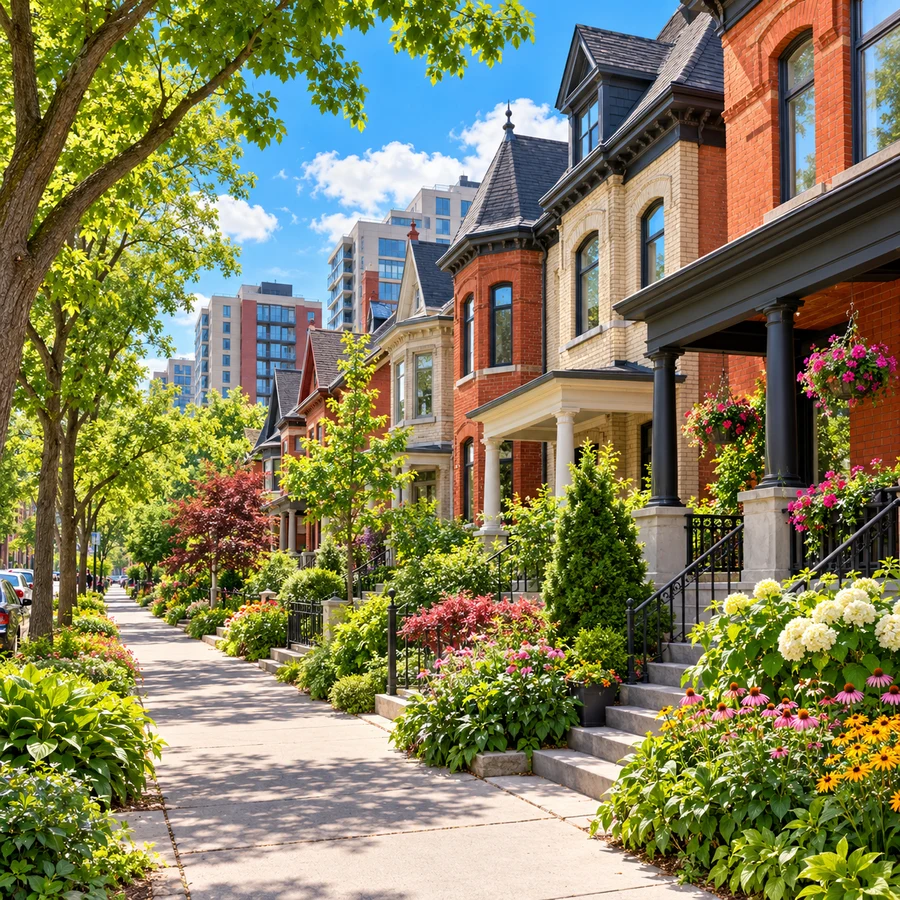
Living in Centretown, Ottawa: Homes, Walkability & Everyday Life
Living in Centretown Ottawa offers a central urban setting with shops, restaurants, apartments, condos and older houses close together. Its appeal is the possibility of building everyday life around walking, cycling and transit. The trade-offs include traffic, limited parking at some properties and a level of street activity that varies considerably from block to block.
Choosing Centretown means looking beyond the neighbourhood name. A condo near Bank Street, an older house on a residential side street and a home near Elgin Street can offer very different daily routines. This guide helps you compare those choices before deciding where to live.
Where Is Centretown in Ottawa?
Centretown sits immediately south of Ottawa’s downtown business district, between Bronson Avenue and the Rideau Canal. Its northern boundary varies with the map or organization using the name. The City’s Centretown Community Design Plan describes a wider study area extending from Gloucester Street to the Queensway and from Bronson to the canal.
The Centretown Community Association represents a broader area reaching north to the Ottawa River. Property websites may use another search boundary. For buyers, the useful question is where a particular home sits relative to work, shopping, parks and transportation.
This guide focuses on the residential neighbourhood south of the business district. The Golden Triangle is part of greater Centretown; Centretown West is a neighbouring area to compare separately. Neither should be treated as an interchangeable label for every central Ottawa address.
What Is Everyday Life in Centretown Like?
Centretown’s everyday appeal comes from having different activities close together: residential streets, main-street businesses, local parks and community facilities. Bank Street, Elgin Street and Somerset Street provide useful reference points when comparing locations.
Near Bank Street, investigate the businesses you would actually use: a grocery stop, pharmacy, café or regular appointment. Near Elgin Street, compare access to restaurants and services with the amount of evening activity near the building. Somerset provides another east–west connection, but the character of individual blocks changes along the street.
A practical test is to plan an ordinary weekday rather than a sightseeing outing. Walk from the prospective home to your grocery store, transit stop and preferred outdoor space. Carrying shopping, crossing busy roads and returning after dark may change your impression of an otherwise attractive location.
What Types of Homes Can You Find in Centretown?
Centretown offers apartment-style condominium options alongside older houses and smaller residential buildings. Ownership, layout and maintenance responsibilities can differ substantially even on the same street. Start with the home type that suits your routine, then compare the specific building and block.
Condominiums and Apartment Buildings
For a condo, compare usable room sizes, storage, outdoor space and the position of the unit within the building. A balcony facing a busy street can feel different from one facing an interior courtyard. Visit with windows open and closed if possible.
Parking, bicycle storage, elevator access and the route from the entrance to the unit deserve attention. Establish what the monthly fees cover and have the condominium documents reviewed by the appropriate professionals. Compare the full ownership cost rather than choosing on asking price alone.
Older Houses and Converted Properties
An older house may offer architectural character and a different layout from a modern condo. Examine the stairs, storage, ceiling heights and outdoor space as carefully as the façade. Arrange an inspection suited to the property and ask about renovation records and major building components.
For a property divided into multiple units, establish its approved use and ownership arrangement before relying on a listing description. If changes are part of your plan, check the property’s heritage status and applicable requirements with the City. Ottawa identifies a Centretown Heritage Conservation District; the neighbourhood name alone does not establish an individual property’s status.
Can You Live in Centretown Without a Car?
A car-light or car-free routine may be practical in Centretown when your home is close to the destinations you use most. Central location alone does not guarantee an easy trip to every workplace or activity.
OC Transpo’s downtown rail network includes Lyon and Parliament stations on Line 1, north of much of residential Centretown. Compare the actual walk to a station with the bus options near your address. A home in the southern part of the neighbourhood may involve a longer station walk than the words “downtown living” suggest.
Use OC Transpo’s current travel planner for your work hours, evening return and weekend activities. Include transfers and the final walk. If you cycle, assess intersections, bicycle storage and the route you would use in different seasons.
If you keep a car, confirm the property’s parking arrangement and test access. Check space dimensions, shared-driveway arrangements and snow storage where relevant. Investigate visitor parking separately; do not assume nearby street spaces will always be available.
What Parks and Recreation Are Nearby?
Centretown combines local urban parks with access to recreation facilities and the Rideau Canal corridor. The most useful option depends on your location and the activity you want.
Dundonald Park is one of the neighbourhood’s recognizable gathering places; the community association highlights it as a setting for local events. Near Elgin Street, the Jack Purcell Community Centre offers an indoor warm-water pool and recreation programming. Check current schedules and registration availability for the activities that interest you.
The canal corridor is another useful destination for walking and cycling. Consult the National Capital Commission’s Capital Pathway information for network details and conditions. A home near the canal can make these outings easier to fit into the day; from another part of Centretown, compare the full route and road crossings.
What Should Families Check About Schools?
School assignment should be checked using the exact property address, grade and program. A school being nearby does not establish attendance eligibility. Start with the OCDSB School Locator or the Ottawa Catholic School Board’s boundary information, as appropriate. Confirm French-language options with the relevant French-language board.
Then test the school journey and investigate childcare and after-school arrangements. For an apartment or condo, consider stroller storage, elevators and the trip from the building to outdoor play space. These practical details can matter as much as the number of bedrooms.
What Are the Advantages and Drawbacks of Living in Centretown Ottawa?
- Convenient everyday destinations: a suitable location can put shops, services and recreation within a manageable walk.
- Different housing choices: compare the convenience of a condo with the space and responsibilities of an older house.
- An active urban setting: restaurants and main streets bring activity, while traffic, deliveries and evening noise may affect nearby homes.
- Less space for cars and storage at some properties: establish what is included rather than assuming a central home has adequate parking or outdoor room.
- A changing built environment: investigate nearby development proposals and construction when comparing a property’s outlook and surroundings.
Visit the same block at different times. Check the entrance, lighting, noise, waste storage and the route you would use after dark. Decide whether the setting works for your household without assuming every Centretown street offers the same experience.
How Does Centretown Compare With Nearby Neighbourhoods?
Compare Centretown locations by the routine they support rather than treating central Ottawa as one uniform area. The Golden Triangle living guide is worth exploring if canal access and the residential streets east of Elgin are priorities. The City describes it as part of greater Centretown.
Centretown West provides another nearby comparison, including access to the Chinatown and Little Italy areas. Across the canal, Sandy Hill offers a different relationship to the university and surrounding streets. South of the Queensway, the Glebe is another area to investigate if Bank Street and established residential streets appeal to you.
We will add links to the separate living guides as they are published. For the growing collection, return to our Central Ottawa Neighbourhoods & Communities hub.
Is Centretown a Good Fit for You?
Centretown is worth considering if you want a central home and value access to shops, services and urban activities. Buyers who prioritize a large yard, several parking spaces or a consistently quiet setting should compare individual properties carefully.
Before shortlisting a home, test three things: your usual weekday trip, your grocery routine and an evening visit to the block. Then compare the home’s condition, ownership costs and usable space. That combination gives you a stronger basis for a decision than the neighbourhood label alone.
Explore Centretown Homes With Sandi Branker
I’m Sandi Branker, a REALTOR® with Zolo Realty serving Ottawa and surrounding communities. I can help you compare Centretown with other Ottawa neighbourhoods, assess the practical differences between properties and understand your options as a buyer.
Zolo-Ottawa.ca provides local community information; current listings and property-search tools are available on Zolo Realty’s main website, Zolo.ca. Use the map to check each property’s location, because search-area boundaries can differ.
